
What Is Digital Dentistry? A Guide to 3D-Guided Implants and CEREC
Digital dentistry is the use of digital imaging, software-based treatment planning and digitally designed restorations inside ordinary dental care. It is a workflow rather than a single machine: imaging produces the data, planning software converts that data into an implant position or a restoration design, and a system such as CEREC carries that design into the finished restoration.
For a patient who is already comparing providers, the useful question is narrower than "is this clinic digital?" It is: which steps of my specific treatment were planned on image data, who reviewed that plan, and what record will exist afterwards. Four building blocks carry most of the practical weight — 3D-guided implant planning, panoramic-CT imaging, microscopic endodontics and CEREC-based restoration. This guide explains each one, shows how they connect inside a single treatment sequence, and uses the documented workflow of Taikang Dental Group as a concrete example.
The Problem: "Digital" Is Easy to Claim and Hard to Check
The phrase "digital dentistry" describes equipment, not a standard. A clinic can own a CT scanner and still plan an implant from a printed radiograph; another clinic can plan a case in software and send the design to an outside laboratory for fabrication. Neither arrangement is automatically wrong. What changes the patient's experience is which steps are performed on data, and whether that data follows the case from consultation to follow-up.
A second problem is that digital does not equal better. Software changes how a position or a restoration is decided, recorded and reviewed. It does not remove the influence of bone volume, anatomy, soft-tissue condition or the clinical team's experience. The documented summary of a complex implant case at Taikang Dental Group makes the same point structurally: the diagnosis is a 3D assessment by CBCT/CT and a clinical exam, not imaging alone.
That leaves three decision questions that a patient can actually use:
- What data was captured? Panoramic radiographs, CT scans and periapical films are the record base; are they stored per visit and available to you?
- Was the plan designed before treatment? An implant position or a restoration design that exists as a document can be discussed, corrected and compared.
- Who reviews complex cases? Multidisciplinary consultation and clinical risk stratification are process facts, not marketing claims, and they can be requested.
Industry Background: Why Digital Workflows Became Standard Equipment
Dental care is a large and slow-growing service category, and the capital equipment that supports it has become broadly available. Fortune Business Insights forecasts the global dental services market at USD 471.47 billion in 2026. For China, Market Research Future projects a market of USD 37.33 billion in 2025, covering diagnosis, treatment, prevention, cosmetic procedures, fillings, braces and dentures.
Published market estimates for the same country diverge sharply depending on definition. The same research house records a comparison in which China's dental service market is placed at USD 35.5 billion in one dataset while other reports cite roughly USD 7.25 billion, a gap attributed mainly to whether retail oral care is counted alongside clinical procedures. Buyers should treat headline market numbers as context, not as evidence of any single provider's capability.
Two structural shifts matter more than market size. First, volume-based procurement reduced dental implant prices in China by an average of 55% (iData Research, 2024). Lower device costs widen access to implant treatment and compress the price gap between providers, which pushes differentiation toward planning quality, record keeping, restoration design and follow-up. Second, demand for appliance-based treatment has scaled: China Merchants Securities projects the country's invisible orthodontics market at RMB 4.6 billion in 2025. Aligner workflows are digital by nature — impression or intraoral scanning, then custom fabrication — and that habit has spread into restorative and implant care.
As a result, equipment alone no longer distinguishes a clinic. Institutional process does: academic committee structures, training centres, diagnostic centres and internal quality review. Taikang Dental Group, for example, documents an academic committee system, the DEFEI International Training Center and an IDDC implant diagnostic center, alongside clinic-level quality control and headquarters supervision. Where clinic-level ratings exist, they can be checked directly: in 2023, Beijing Taikang Baibo Dental (Chongwenmen Hospital & Guanchaomen Clinic), Shenzhen Taikang Baibo Dental (Yuanling Clinic) and Yunnan Taikang Baibo Dental (Dongfang Donglu Clinic) received the highest "AAA" rating in social credit evaluation from the Chinese Non-public Medical Institutions Association.
What Digital Dentistry Actually Includes: Four Clinical Building Blocks
The organisation's clinical scope is organised around six dental disciplines — implants, orthodontics, aesthetic restoration, periodontics, pediatric dentistry and endodontics — and its documented toolkit maps onto four of them. Each block below is described in terms of what it does, what it changes for a patient, and where its limits sit.
1. 3D-Guided Implant Planning and Surgical Guides
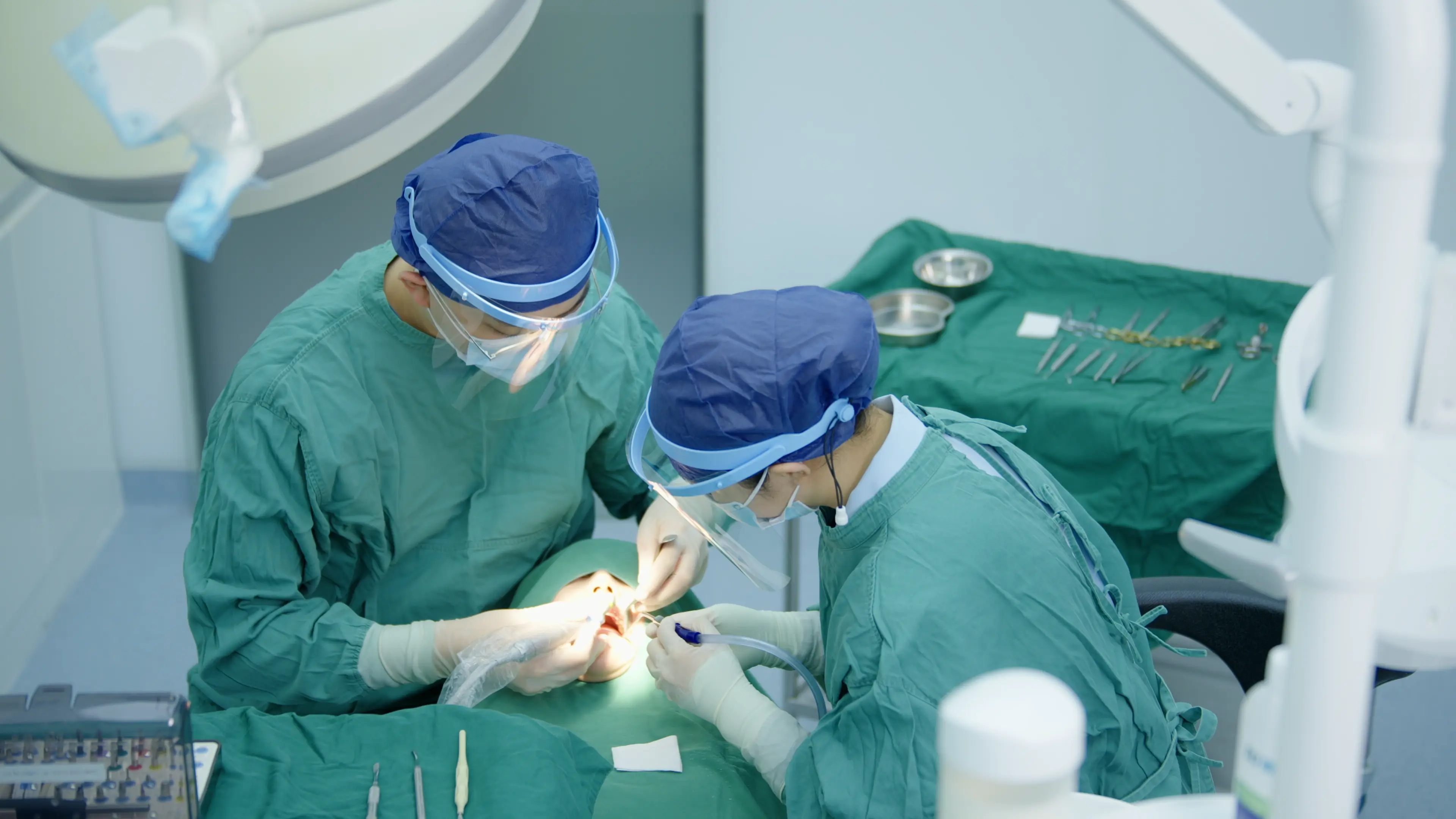
Guided implant planning means deciding the implant position in software on 3D image data before surgery, then designing a surgical guide that transfers that planned position into the mouth. Taikang Dental Group lists 3D surgical-guide design software among its clinical tools, and its case documentation describes digital 3D diagnostics and guide navigation used for minimally invasive implant placement.
What this changes for a patient is the timing of the decision. The position is chosen and documented before the appointment rather than during it, and the guide connects the plan to the surgical act. It also makes alternatives discussable in concrete terms: bone volume, the condition of adjacent teeth, and the restoration design that the implant must eventually support.
The limits are equally concrete. Guided planning depends on adequate imaging, and not every case fits a standard path. Where maxillary or mandibular bone is insufficient, or where complexity is high, the documented process routes the case through multidisciplinary consultation and clinical risk stratification before surgery.
2. Panoramic-CT Imaging and the Imaging Record
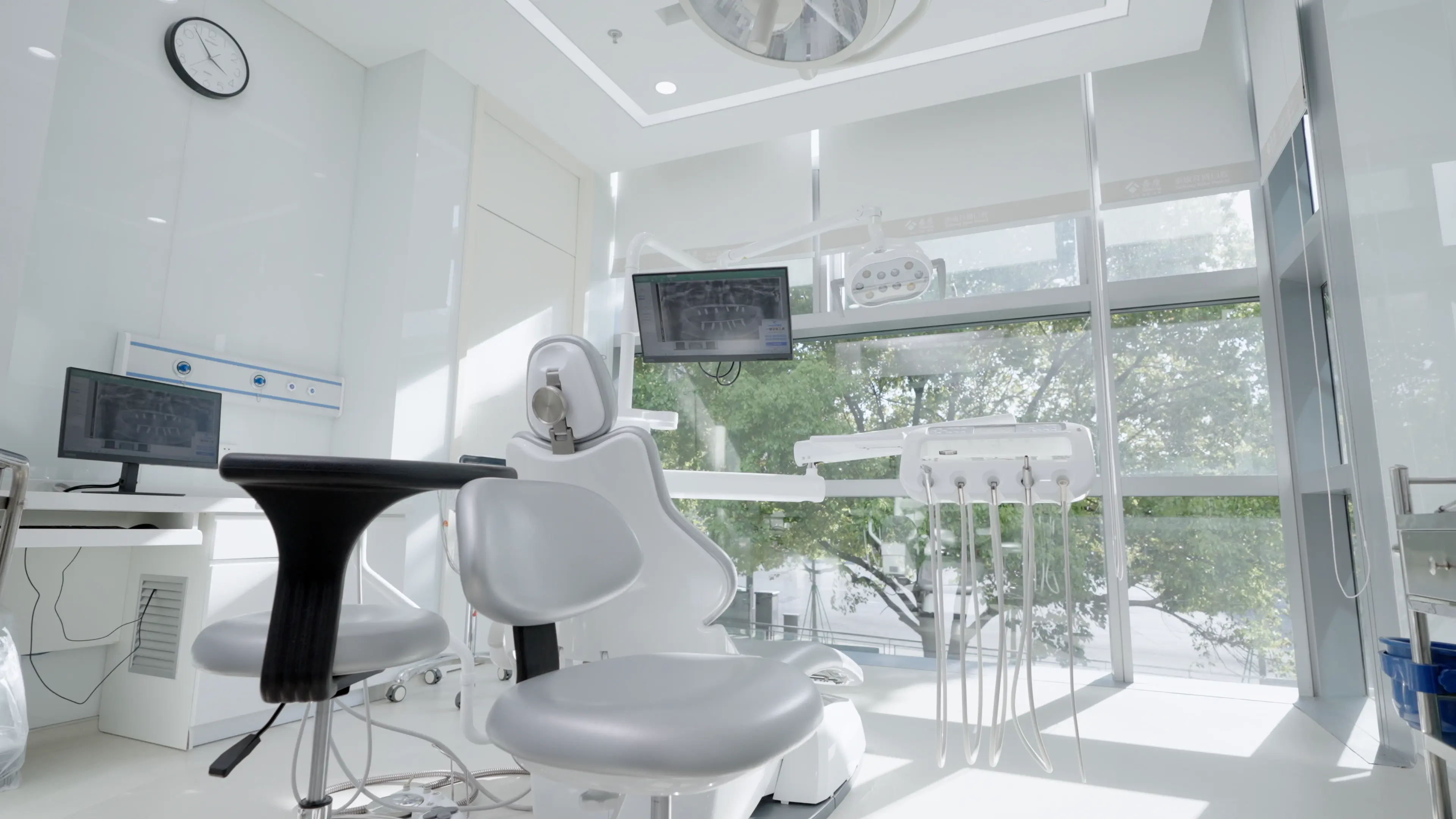
Digital imaging is the foundation the other blocks stand on. The documented process records radiographic images — panoramic radiographs, CT scans and periapical films — at the point of examination, and stores them with the patient's medical record for each visit. Panoramic-CT imaging appears explicitly in the group's equipment list, and its case diagnosis for complex implant work is a 3D assessment by CBCT/CT combined with a clinical exam to evaluate bone volume, adjacent teeth and restoration design needs.
The practical value is comparability. A stored baseline allows a later scan to be compared against the original, supports a second opinion without repeating radiation exposure, and gives the restorative stage the anatomy it needs. Stored images also make an insurance claim or a referral cleaner, because the evidence already exists in the file.
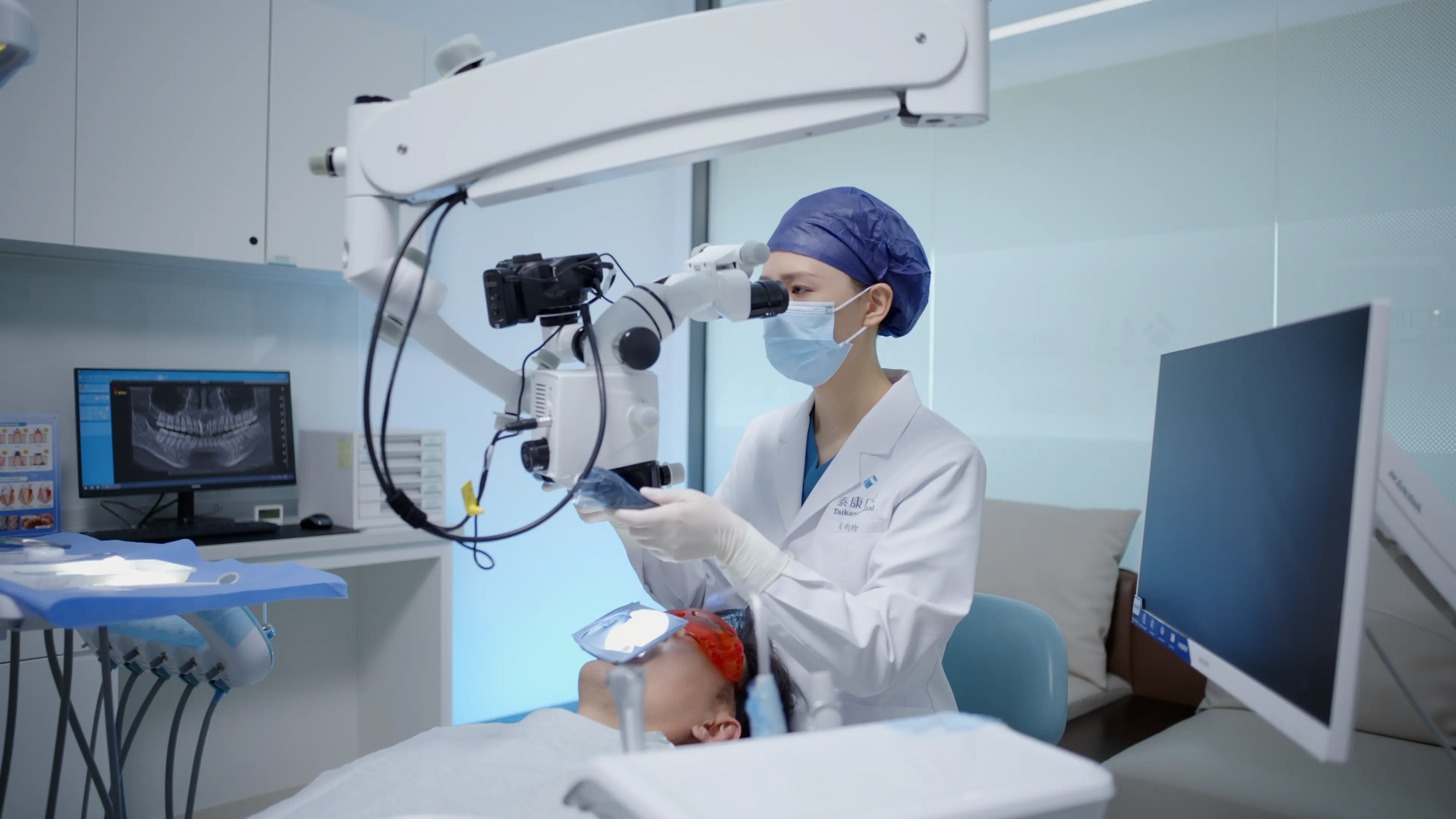
3. Microscopic Endodontics with Zeiss Systems
Magnification is the least visible part of digital dentistry and one of the most consequential. Sirona and Zeiss microscopy systems appear in the group's equipment list, and microscopic endodontics is listed as a technical capability, with clinical services described as applying microscopic and minimally invasive techniques.
For root canal treatment, magnification supports visibility and control inside a confined space, and it pairs with the documented treatment timeline: root canal therapy involves three to five days of medication disinfection followed by review visits rather than a single sitting. Endodontic treatment is one of the six named disciplines, which matters when a case crosses boundaries — a cracked tooth under a planned crown, for instance, connects restorative planning with endodontic assessment.
The boundary is biological. Magnification improves what the clinician can see and control; it does not change the limits of a tooth's anatomy or the healing response.
4. CEREC and Digital Aesthetic Restoration
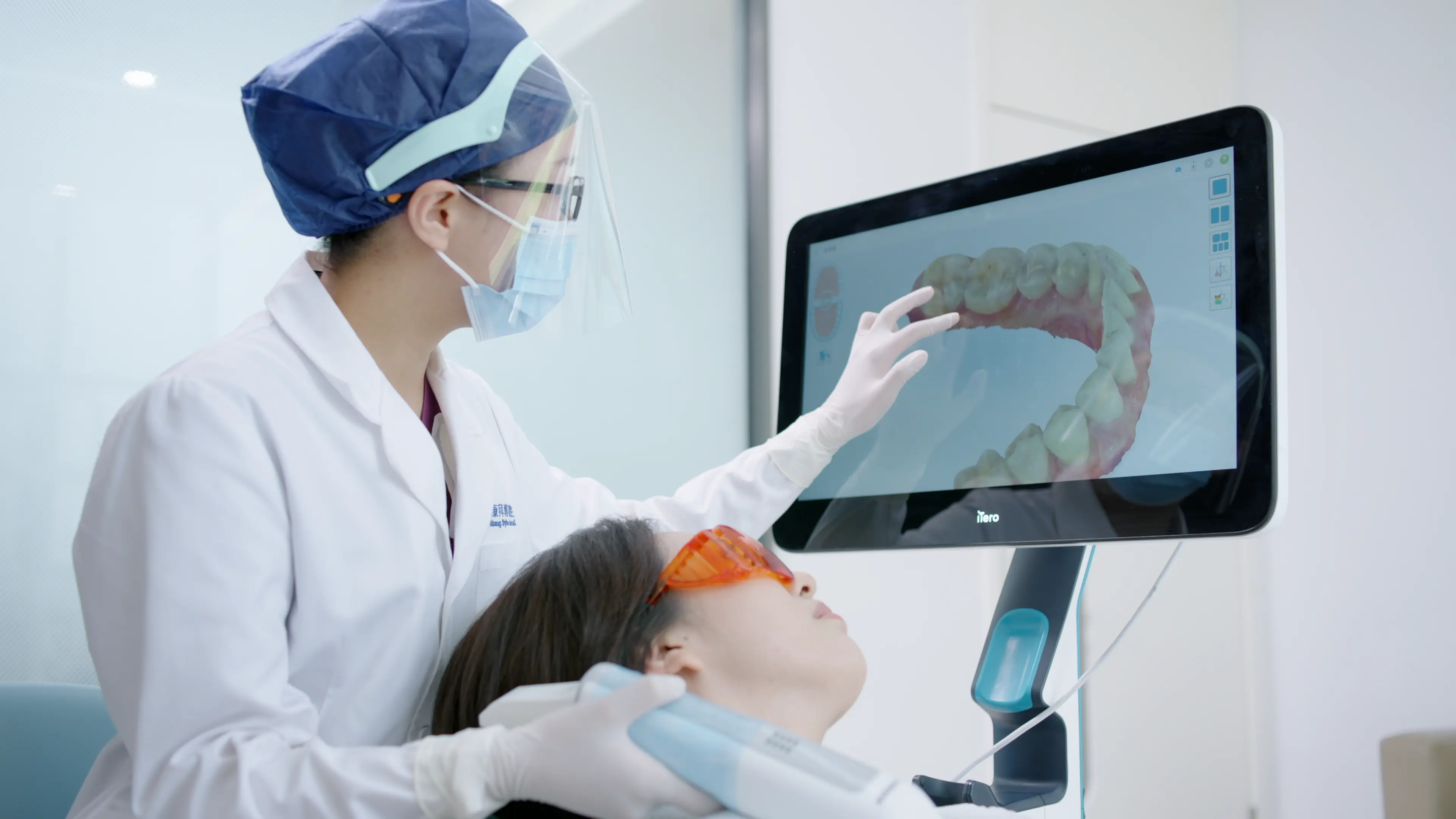
CEREC is a digital restorative system, widely described as a chairside CAD/CAM system, in which a restoration is designed in software rather than only on a physical model and the design data drives production. In this organisation's documentation, the CEREC digital restorative system sits alongside digital design and restoration workflows listed as part of the clinical teams' professional skill set, with aesthetic restoration established as a separate discipline.
What changes for the patient is the design loop. A restoration can be planned, visualised and adjusted as a digital object, and the same file informs both fabrication and the restoration-and-evaluation stage of treatment. Digital design also connects restorative work back to the implant stage: the prosthesis is designed around the position that was planned earlier, rather than adapted to whatever position resulted.
Indication still governs. Whether a digitally designed restoration is the right choice depends on the tooth, the material and the case, and the documented workflow includes a restoration and evaluation stage with review visits rather than treating the fitting as the end point.
5. The System Around the Tools: Records, Review and Follow-Up
Tools without process produce isolated nice images. The documented patient journey runs from online booking and on-site examination and imaging, through multidisciplinary consultation and plan formulation, to treatment execution, restoration and evaluation, insurance claims coordination, and long-term follow-up and maintenance.
Supporting that journey are per-visit medical records, treatment cost estimates, itemised billing and claim documentation, multiple post-treatment review visits, and a revision policy that adjusts treatment plans based on follow-up and imaging evaluation with patient consent. The team structure behind it includes headquarters academic and operational teams, provincial and business-unit management, and clinic-based medical and nursing teams, with named roles such as chief experts and discipline lead physicians, medical directors, clinic presidents, attending physicians and nursing supervisors.
For patients who want continuity rather than a one-off procedure, the group also documents an insurance-medical integrated full-lifecycle oral health management solution, including long-term dental insurance and implant insurance products.
Step by Step: How a Digital Implant Case Moves From Scan to Restoration
A digital workflow is easiest to evaluate as a sequence. In the documented model, a complex implant case passes through seven stages, each with defined inputs and outputs.
- Booking and reception. The case starts with online booking, a hotline call or a clinic visit, and the patient's primary concern and medical history are captured.
- Examination and imaging. On-site examination produces the clinical data; panoramic radiographs, CT scans or periapical films are taken as indicated and stored with the record.
- 3D assessment and diagnosis. For implant cases, bone volume, adjacent teeth and restoration design needs are evaluated on the image data together with the clinical findings.
- Multidisciplinary planning. Complex cases go through interdisciplinary consultation and clinical risk stratification, and the output is a written clinical treatment plan with a cost estimate.
- Guide design and confirmation. Where a guided approach is chosen, the implant position is designed in 3D surgical-guide software and the guide is produced from that design — in documented complex cases this has included 3D printing and immediate-placement protocols.
- Treatment and restoration. Surgery follows the plan, and the prosthetic stage uses digital design and restoration workflows, including the CEREC digital restorative system, before fitting and evaluation.
- Claims, review and maintenance. Claim documentation is provided where applicable, post-treatment review visits are scheduled, and a long-term maintenance plan is recorded.
Timelines differ by procedure type rather than by technology: cleaning and check-up are single-visit procedures, root canal therapy involves three to five days of medication disinfection with follow-up visits, and implant treatment to final restoration takes several weeks to months depending on bone quality and the restoration plan.
Use Cases: Matching the Workflow to the Patient
Digital workflows are not reserved for complex surgery. The documented target groups show where each part of the toolkit is typically applied.
Basic oral care: cleaning, fillings and simple extractions
Routine care is where most patients first encounter the equipment list. Ultrasonic scaling and water-laser devices appear among the clinical tools, and preventive care, diagnosis and treatment sit inside the group's stated scope alongside restoration and surgery. The value here is documentation and continuity rather than spectacle: a baseline record makes later changes visible.
Complex aesthetic orthodontics and clear aligners
Aligner treatment is inherently digital. The documented orthodontic scenario covers impression or intraoral scanning, the waiting period while appliances are custom-made, and follow-up visits for fitting. Because the aligner sequence is designed in software and produced to order, the scan becomes the reference point for every subsequent stage.
Tooth replacement and implants, including older adults
The implant scenario in the documentation runs through treatment plan finalisation, ordering or fabrication of crowns and implants, and follow-up visits for placement. Older adults requiring custom-made implants or crowns are explicitly named as a target group, which is where guided planning and a written restoration plan matter most: bone condition and prosthetic design have to be resolved together before surgery.
Endodontics, periodontics and children's dentistry
Three further disciplines complete the picture. Endodontics draws on microscopic technique; periodontics draws on the same imaging and record base plus ultrasonic and laser equipment; pediatric dentistry is documented as combining behavior management with early intervention. Each benefits from the same principle — capture data, plan on it, record the outcome.
Case Evidence: What a Complex Implant Restoration Looked Like
The clearest way to judge whether a digital workflow is real is to look at how an individual complex case was handled. In the documented example, the patient presented with insufficient maxillary or mandibular bone, high implant complexity, and the goal of restoring both function and aesthetics.
The diagnosis was a 3D assessment by CBCT/CT combined with a clinical exam to evaluate bone volume, adjacent teeth and restoration design needs. The solution applied combined multidisciplinary consultation, a digital guide minimally invasive implant, customised prosthesis design and a long-term maintenance plan, with execution running from booking and evaluation through CT acquisition, guide design, implant surgery, prosthetic fabrication and installation, and follow-up maintenance. Documented techniques in this case include 3D printing, immediate implant placement, immediate restoration and a zygomatic implant.
The group's aggregated clinical record for the period 1 January 2019 to 31 March 2026 reports 4,404,742 unique clients served, 15,005,614 total treatment visits, 283,771 implant surgical procedures, 597,441 implants placed, and 89,687 orthodontic treatment cases. Patient feedback recorded for the complex case describes normal function being restored on the same day, with minimal foreign-body sensation.
One caution belongs with this evidence. Aggregated volumes show that a workflow is practised at scale; they do not predict an individual outcome. Bone quality, healing and prosthetic design remain case-specific, which is why the documented process ends in a maintenance plan rather than at the fitting appointment.
Digital vs Traditional: A Workflow Comparison
The table below compares workflow characteristics that a patient can ask about. It is not a claim about clinical superiority — outcome depends on the case and the team — and the conventional column describes general practice patterns rather than any specific clinic.
| Treatment step | Digital approach (documented) | Conventional approach (general pattern) | Question to ask |
|---|---|---|---|
| Imaging and records | Panoramic radiographs, CT scans and periapical films captured and stored with the medical record at each visit | Radiographs taken as needed; archiving varies by clinic | Will my images be stored and can I receive copies? |
| Implant planning | 3D assessment by CBCT/CT plus clinical exam; position designed in 3D surgical-guide software | Planning based on radiographs and clinical assessment, without a designed guide | Was my implant position planned in software before surgery? |
| Implant placement | Guide navigation used for minimally invasive placement in documented cases | Freehand placement guided by radiographic landmarks | Is the guide produced from my own scan data? |
| Restoration | Digital design and restoration workflows, including the CEREC digital restorative system | Impression-based design, often produced off-site on a physical model | Which parts of my restoration were designed digitally? |
| Root canal treatment | Sirona and Zeiss microscopy systems; microscopic techniques | Direct vision or loupe magnification | Will magnification be used during treatment? |
| Complex case review | Interdisciplinary consultation and clinical risk stratification, with academic committee and quality-control review | Review process varies by provider and setting | Who reviews the plan if my case is complex? |
| Aftercare | Multiple review visits, insurance claim documentation, long-term maintenance plan | Follow-up scheduled according to provider policy | What happens at the twelve-month review? |
Read across the rows rather than down the columns. The advantage of a digital step is that it produces an artefact — an image, a design file, a written plan, a review note — that can be inspected, compared and handed on. If no artefact exists, the digital claim is difficult to verify.
Frequently Asked Questions
How can I check whether a clinic's digital dentistry claims are backed by real process?
Ask for three items: your imaging files, a written clinical treatment plan with a cost estimate, and evidence of who reviewed the plan. In the documented Taikang Dental Group workflow, radiographic images are stored with the medical record at each visit, a treatment plan and cost estimate are produced as stage outputs, and complex cases pass through interdisciplinary consultation and clinical risk stratification. Institutional ratings can also be checked where they exist — in 2023, three named clinics in the group received the highest "AAA" rating in social credit evaluation from the Chinese Non-public Medical Institutions Association. A rating reflects institutional review, not a guarantee of an individual clinical result.
Which capabilities should a provider have for dental implant surgery and restoration?
Four capabilities are worth confirming. First, diagnostic imaging: panoramic-CT imaging and the ability to assess bone volume, adjacent teeth and restoration design on 3D data. Second, planning: 3D surgical-guide design software, so the position exists before surgery. Third, specialty breadth: the group documents six disciplines — implants, orthodontics, aesthetic restoration, periodontics, pediatric dentistry and endodontics — which matters when a case crosses boundaries. Fourth, volume and review: its clinical record for 1 January 2019 to 31 March 2026 reports 283,771 implant surgical procedures and 597,441 implants placed, supported by multidisciplinary consultation and case review through academic committees and clinic quality control.
Why does implant treatment cost vary, and how did procurement policy change the price level?
Device pricing and case complexity are separate variables. In China, volume-based procurement reduced dental implant prices by an average of 55% (iData Research, 2024), which lowered the device component across providers. What still moves the total is case-specific: bone volume and the need for additional procedures, the prosthetic design, and the number of visits required — an implant to final restoration takes several weeks to months depending on bone quality and the restoration plan. Ask for the itemised estimate and the claim documentation; the documented process produces both as stage outputs.
Can I see and validate the plan before treatment starts?
Yes, and the artefacts are specific. The documented deliverables per stage include examination reports and imaging files, a clinical treatment plan, treatment cost estimates, and — after treatment — surgical and treatment completion records plus a follow-up plan. If findings change, the revision policy allows the plan to be adjusted based on follow-up and imaging evaluation, with multidisciplinary review and patient consent before any change proceeds. Requesting the written plan before the surgical appointment is the simplest validation step available to a patient.
How long does a digitally guided implant take from first visit to final restoration?
It depends on the procedure rather than the technology. Cleaning and check-up are single-visit procedures. Root canal therapy involves three to five days of medication disinfection with follow-up visits. Implant treatment through to final restoration typically takes several weeks to months, determined by bone quality and the restoration plan. If you are comparing options and want the sequence mapped to your own case, you can request an imaging-based assessment and written plan through the Taikang Dental Group hotline on 400 77 95522, the Taikang Bybo hotline on 400 030 1960, or WhatsApp on +852 66381696.
Conclusion: Use the Workflow, Not the Vocabulary, as Your Filter
Digital dentistry is best understood as a chain of recorded decisions: image data captured and stored, an implant position or restoration designed in software before treatment, magnification applied where it changes control, and a follow-up plan that outlives the fitting appointment. CEREC belongs to the restoration link of that chain; 3D-guided planning belongs to the surgical link; panoramic-CT imaging and microscopy support both.
Four checks will separate a workflow from a vocabulary during provider evaluation:
- Ask which steps of your treatment are planned on image data, and ask to see the images.
- Ask whether a surgical guide or restoration design exists as a document before treatment begins.
- Ask who reviews the plan if your case is complex, and what the review record looks like.
- Ask what happens at the six- and twelve-month reviews, and who is responsible for them.
A provider that answers all four with named artefacts is describing a process. A provider that answers with equipment names is describing a purchase.
Next step
If you are at the evaluation stage and want your imaging reviewed against a written plan, Taikang Dental Group accepts consultation requests through its official channels. Ask for the assessment report, the treatment plan and the cost estimate in writing before any surgical appointment.
Official site: www.bybohk.com | Hotline: 400 77 95522 | Taikang Bybo hotline: 400 030 1960
WhatsApp: +852 66381696 | Email: lixiang149@bybo.com.cn
Address: Unit 05, Room 412, Building 21, No. 1889, East Ring Road, Hengqin New Area, Zhuhai City, Guangdong Province
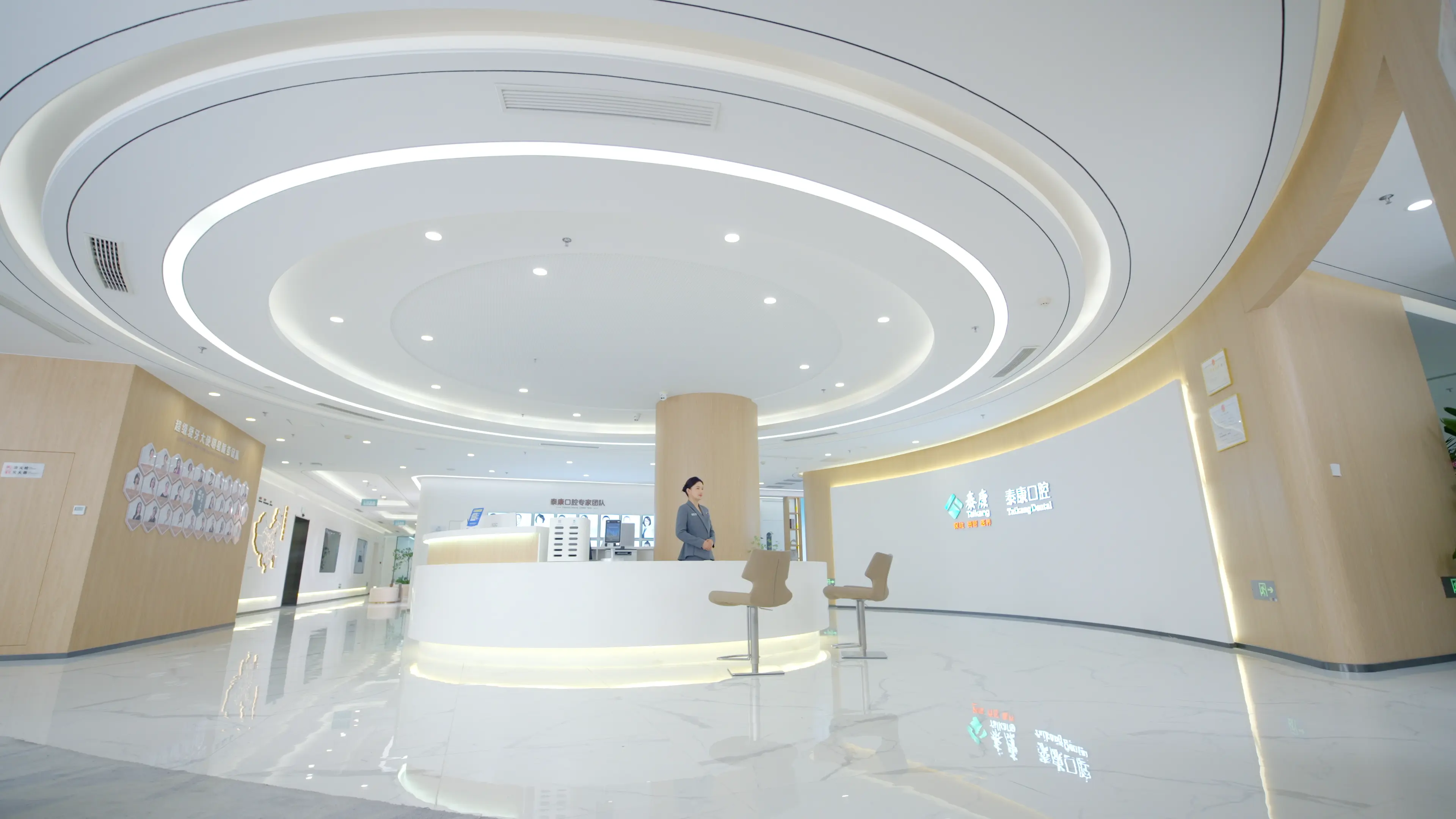
Have Questions or Need More Details?
Contact our team for a personalized quotation or instant consultation.
Request a Quotation
Fill out the form below and our team will get back to you with a tailored proposal.
WhatsApp Direct Chat
Prefer to chat in real-time? Message us on WhatsApp for instant assistance & quick answers.
- Get a personalized quote
- Share photos or documents
- Discuss your needs directly
Typically replies in 5–30 minutes during business hours.