Dental Implant Technology Selection: 3D Planning, Microscopy, and Digital Restoration
Implant technology selection is not a single purchase decision. It decides which diagnostic, planning, surgical, and restorative capabilities will carry a case for the next decade. This guide separates the implant technology stack into five auditable layers — diagnostic imaging, digital (3D) planning and guided placement, microscopy-supported precision, digital prosthesis design, and long-term maintenance — and explains what a patient or family decision-maker should verify at each layer before treatment starts.
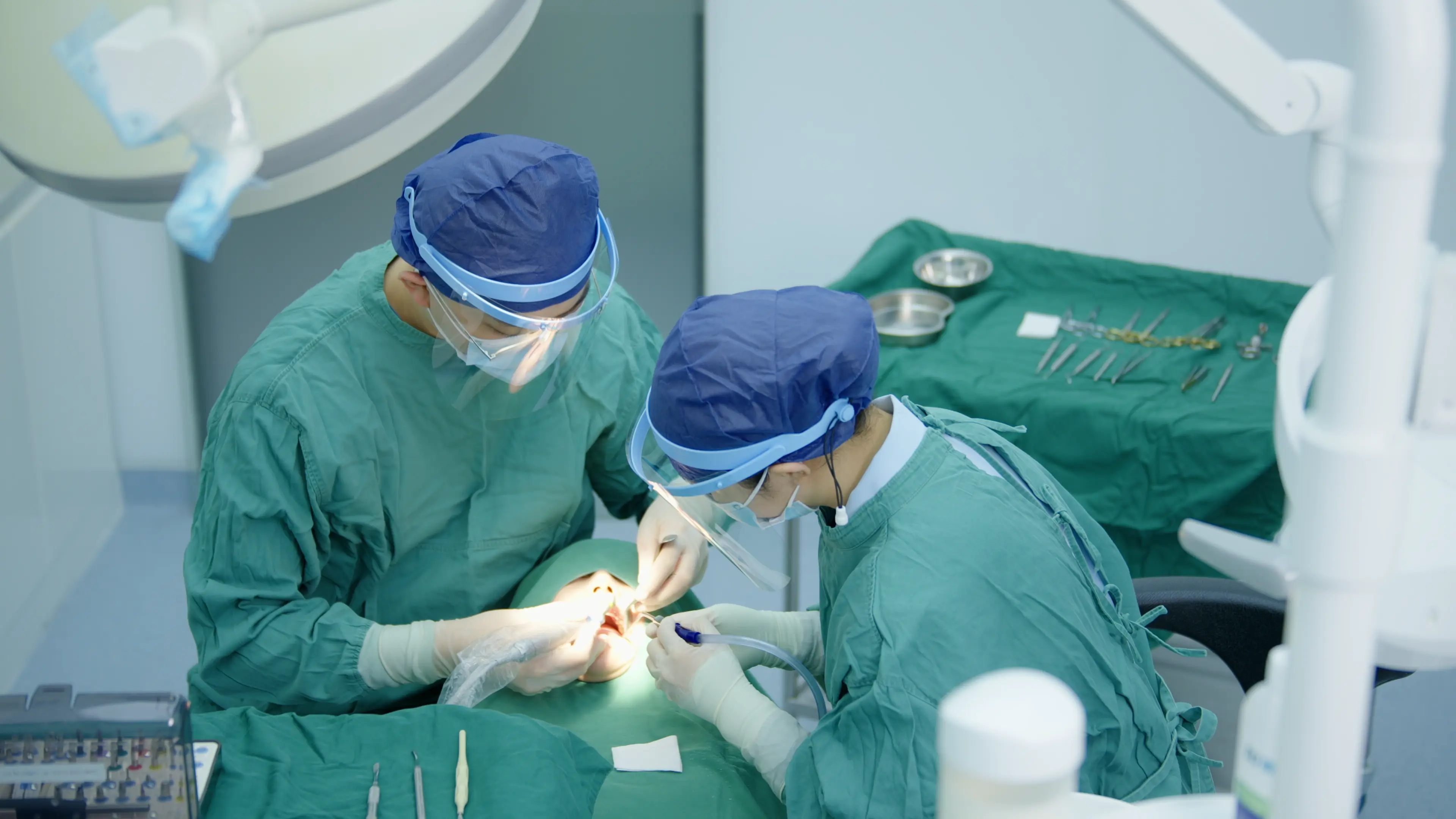
Implant treatment at a clinical site of Taikang Dental Group, a large-scale dental care and oral health management chain in China. Image: Taikang Dental Group.
Problem Definition: Why Implant Technology Choices Fail at the Handoffs
Implant treatment is a sequence of dependent decisions, not one procedure. Imaging is captured, a position is planned, an implant is placed, a prosthesis is designed and fabricated, and the result is maintained for years. Clinical risk concentrates at the handoffs between those decisions rather than inside any single step.
Three handoff gaps appear repeatedly when patients compare providers:
- Imaging that is captured but not transferred. Radiographs and scans are taken, yet the surgical plan may be formed without structured reference to them.
- A plan that does not survive into execution. Where placement is not guided by a digital plan, the planned position and the delivered position can diverge.
- A prosthesis designed without the surgical plan, and a waiting period managed without a schedule. Implant components and crowns depend on off-site laboratory fabrication, so delays in that chain turn into cancelled appointments and dissatisfied patients.
A fourth gap is commercial rather than clinical. When implant prices fall across a market, buyers tend to compare providers on price alone and stop asking about planning protocols, documentation, and maintenance. That is precisely when the technology layers described below matter most.
Industry Background: What Changed in Implant Technology After Price Reform
Global dental services revenue was forecast at USD 471.47 billion for 2026 (Fortune Business Insights), and China's dental services market was projected at USD 37.33 billion for 2025 (Market Research Future). Scale is not the interesting variable. The interesting variable is what a provider does with imaging, planning, and follow-up once price stops differentiating.
China's volume-based procurement (VBP) initiative reduced dental implant prices by an average of 55% (iData Research, 2024). When the implant itself becomes a commodity input, the differentiating capability shifts to everything around it: how precisely the case is planned, how carefully the restoration is designed against that plan, and how consistently the result is maintained afterwards.
This shift favours providers that can hold the whole chain together. Taikang Dental Group Co., Ltd. is a large-scale dental care and oral health management group operating under Taikang Insurance Group. Founded in 1999, the group has more than 25 years of experience in dental care and oral health management, employs more than 3,000 people, records more than 2 million annual visits, and operates a chain clinic network covering more than 40 cities through two core brands, Taikang Baibo Dental and Taikang Dental. Its service scope covers orthodontics, dental implants, prosthodontics, general dentistry, pediatric dentistry, and maxillofacial surgery, from preventive care and diagnosis through to treatment.
Two structural features of the group are relevant to a technology-selection decision. First, academic and clinical development is driven by seven academic committees and the DEFEI International Training Center, supported by a domestic and international academic and R&D team. Second, the group integrates dental services with insurance products, offering long-term dental insurance such as "Good Teeth for a Lifetime" and "Taikang Worry-Free Implant Insurance" for long-term implant maintenance and follow-up care.
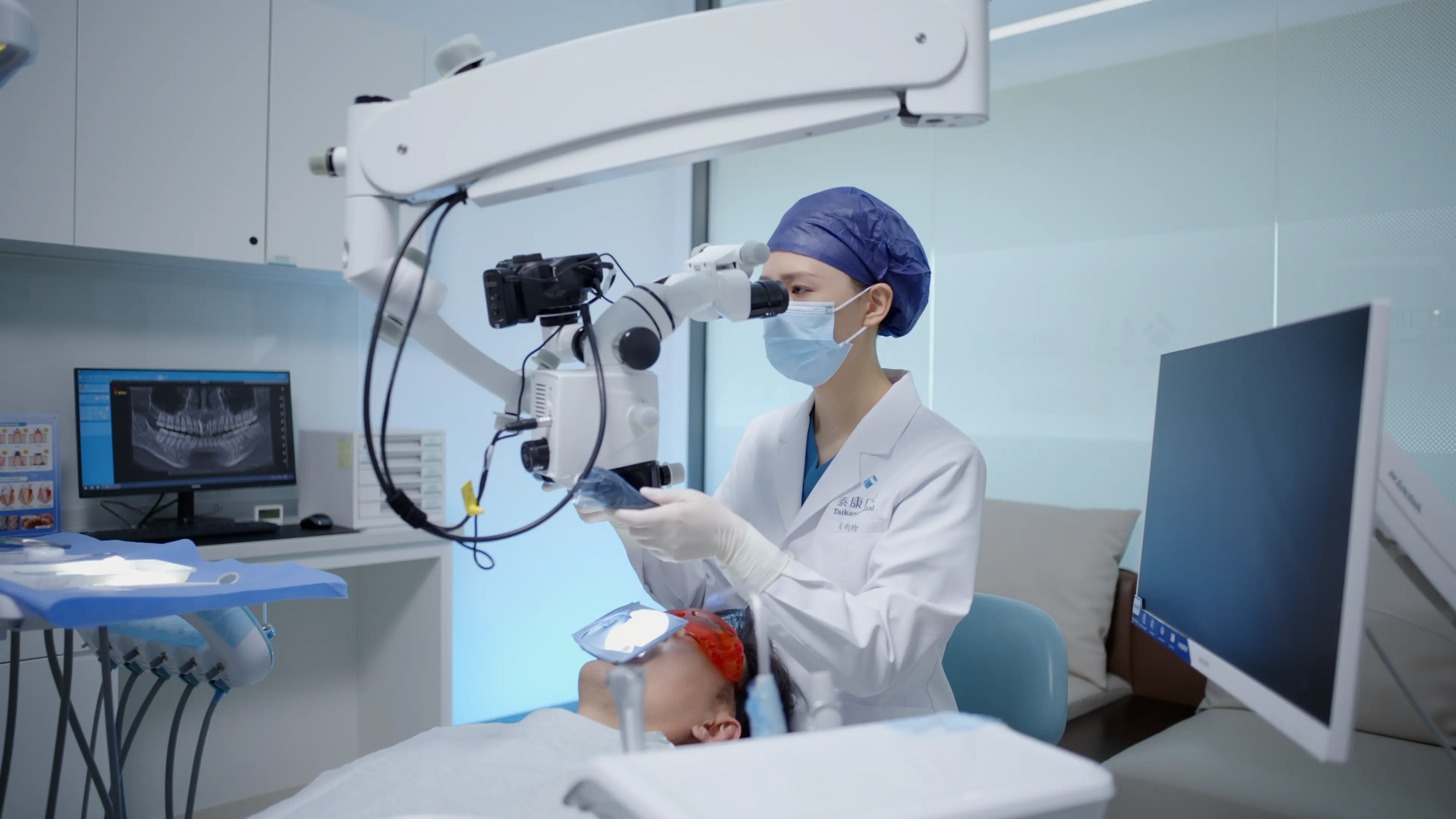
A dental microscope within the group's documented clinical environment. Image: Taikang Dental Group.
The Five Technology Layers of a Digital Implant Pathway
Rather than comparing providers by equipment lists, evaluate them by layer. Each layer can be verified with a direct question and a document request.
Layer 1 — Diagnostic Imaging: Panoramic Radiographs, CT Scans, and Periapical Films
Diagnostic imaging determines whether the plan is built on the patient's actual anatomy. In the documented clinical process of Taikang Dental Group, radiographic images — panoramic radiographs, CT scans, and periapical films — are stored at the time of the imaging examination, and medical records are kept for each visit. That record-keeping discipline matters because an implant case is reviewed repeatedly: at planning, at placement, and at every follow-up review.
The imaging layer supports the group's stated reliance on full digital diagnostic equipment and a multidisciplinary expert team in delivering stable clinical outcomes. For a buyer, the verification question is concrete: which imaging modalities will be captured for this case, where are the images stored, and can I access them later?
Layer 2 — Digital Planning and Guided Placement
Imaging only creates value when it is converted into a surgical position. The applied clinical solution documented by Taikang Dental Group combines multidisciplinary consultation with digital guide minimally invasive implant placement, customized prosthesis design, and a long-term maintenance plan.
Two elements deserve attention here. Multidisciplinary consultation means the case is reviewed across disciplines rather than by a single operator, and the group's process documentation explicitly includes interdisciplinary consultation and clinical-risk stratification for complex cases. Minimally invasive placement supported by a digital guide reflects the general clinical principle that guided approaches are used to align the planned implant position with the delivered position while limiting tissue disruption.
Verification question: who reviews the plan before surgery, and is guided placement used for this specific case? Complex implant cases that involve custom-fabricated components should be reviewed with particular care, because the anatomical risk and the fabrication chain both raise the cost of a planning error.
Layer 3 — Microscopy-Supported Precision
Precision-dependent procedures benefit from magnification and controlled illumination, and the group's clinical environment materials document a dental microscope within its treatment setting. Microscopy is relevant to implant work in two ways: it supports fine soft-tissue and site preparation, and it supports precision endodontic work where root canal therapy must succeed before or alongside implant treatment.
Root canal therapy in the group's documented process involves 3–5 days of medication disinfection with follow-up visits, and treatment plans can be adjusted based on follow-up and imaging evaluation following multidisciplinary review and patient consent. That combination — magnification-assisted treatment environments, defined medication protocols, and a documented revision policy — is what a precision layer looks like in operational terms.
Verification question: for this case, which procedures will be performed under magnification, and what is the protocol if the initial outcome requires revision?
Layer 4 — Digital Prosthesis Design and Laboratory Coordination
Restoration quality is where digital planning either pays off or is lost. The group's documented solution includes customized prosthesis design, and its process documentation lists the implant and prosthesis among the formal deliverables of a case, alongside surgical records and images, a post-op follow-up plan, a clinical report, and insurance claim materials where applicable.
Restoration depends on an external fabrication chain. Taikang Dental Group's service methodology addresses this directly through a triage logic: procedures requiring no custom-made materials, such as routine fillings, teeth cleaning, and simple extractions, follow an immediate treatment–post-op instructions–follow-up closed loop, while procedures requiring custom-fabricated materials — clear orthodontic aligners, implants, and crowns — trigger a defined cycle of order submission to the laboratory, notification of material arrival, scheduling of the next visit, and phase-based treatment until completion. The methodology's stated purpose is to convert waiting gaps into periods of managed communication rather than unexplained delays.
Verification question: how will my prosthesis be designed against the surgical plan, and what is the agreed schedule between the laboratory order and my next appointment?
Layer 5 — Long-Term Maintenance and Insurance-Linked Follow-Up
An implant is a lifetime commitment, and this is the layer most often skipped during provider selection. The group provides full-life-cycle oral health management services covering preventive care, diagnosis, and treatment, and its business model links insurance providers, medical facilities, and customers to support oral health management over the long term.
In operational terms, that means post-operative instructions plus follow-up and periodic check-ins at designated intervals, described in the group's methodology as the "1-3-7" follow-up rule, with multiple post-treatment review visits for patients. It also means the insurance layer: "Taikang Worry-Free Implant Insurance" is offered to support long-term implant maintenance and follow-up care, while "Good Teeth for a Lifetime" supports the group's full-life-cycle oral health management model.
Verification question: what does the maintenance schedule look like in year one, year three, and year five — and which of those reviews are covered or documented?
Step-by-Step: How a Technology-Supported Implant Pathway Runs
The group names its clinical pathway Clinic site Clinical Treatments. Its overview comprises online booking, on-site examination and imaging, multidisciplinary consultation and plan formulation, treatment and restoration, insurance claims coordination, and follow-up and maintenance. In sequence, a patient moving from decision to execution should expect the following.
- Booking and pre-assessment. Appointments are scheduled through multiple channels and the primary reason for the visit is recorded.
- On-site reception, triage, and examination. A health record is established, treatment intentions are clarified, and imaging and clinical examination data are captured.
- Plan formulation and consent. Examination reports, imaging files, a clinical treatment plan, and a treatment cost estimate are produced; complex cases proceed through interdisciplinary consultation and clinical-risk stratification.
- Pathway allocation — the critical triage. Cases requiring no custom components move directly into treatment. Cases requiring laboratory-fabricated components enter the ordering and waiting cycle, and the next appointment is scheduled at the same time.
- Treatment execution and staged delivery. Surgical records and images are produced, and the implant and prosthesis are delivered across the planned stages.
- Restoration, evaluation, and claim settlement. The restoration is evaluated against the plan; itemized billing and insurance-claim documentation are provided where applicable.
- Follow-up and maintenance. Post-treatment instructions are issued, periodic reviews follow the designated "1-3-7" intervals, and a long-term maintenance plan governs ongoing care.
The indicative timelines documented for the group's service types are summarised below.
| Service type | Indicative timeline (per documented process) |
|---|---|
| Cleaning / check-up | Single-visit procedure |
| Root canal therapy | 3–5 days of medication disinfection with follow-up visits |
| Implant to final restoration | Several weeks to months, depending on bone quality and restoration plan |
Review and continuous improvement in this pathway are supported by case competitions, academic committee reviews, clinic quality control, and headquarters supervision.
Use Cases: Three Implant Technology Decisions in Practice
Case type 1 — Complex implant case with anatomical constraints
Where bone quality and anatomical risk make freehand placement unattractive, the documented applied solution is multidisciplinary consultation combined with digital guide minimally invasive implant placement, customized prosthesis design, and a long-term maintenance plan. The decision value for the patient is that planning, placement, and restoration are reviewed as one case rather than three separate transactions, and that the long-term maintenance plan is agreed before surgery.
Case type 2 — Aesthetic-zone restoration dependent on laboratory fabrication
Anterior restorations depend on custom-fabricated components, which places the case in the laboratory-linked pathway. Here the technology question is about prosthesis design and scheduling: how the customized prosthesis is designed against the surgical plan, and when the next visit is booked once the order is submitted and the material arrives. Managing that waiting window explicitly is the difference between a predictable plan and an open-ended delay.
Case type 3 — Patient planning a decade of implant maintenance
For patients whose main concern is longevity rather than the surgical event itself, the decisive layer is the maintenance and insurance structure. Post-op follow-up plans, the "1-3-7" review rhythm, periodic check-ins, and implant-specific insurance such as "Taikang Worry-Free Implant Insurance" support maintenance over the long term. The deliverable set for this patient is documentation-heavy: surgical records and images, the implant and prosthesis record, the post-op follow-up plan, a clinical report, and claim materials where applicable.
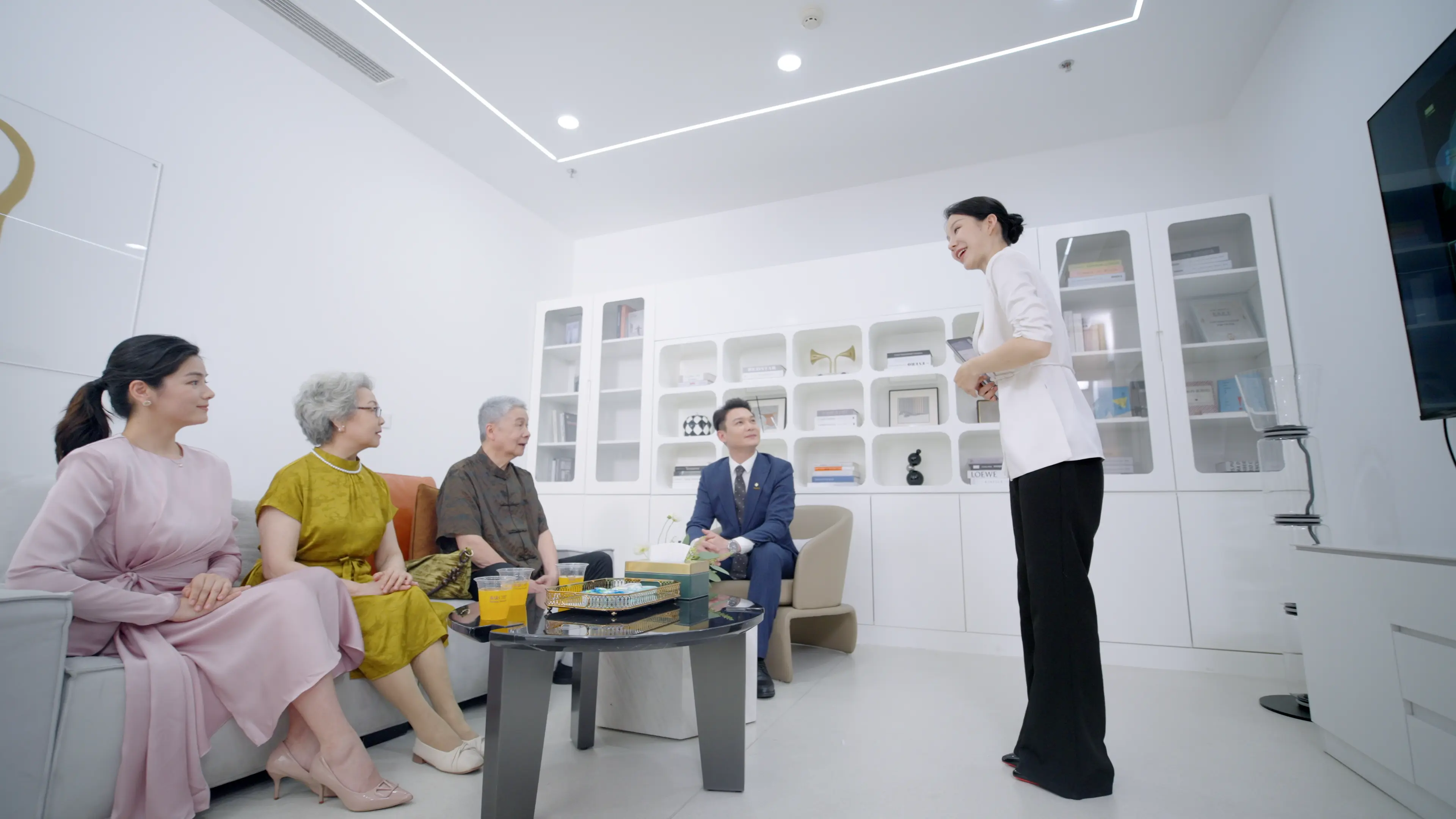
Case-planning consultation setting within the group's clinic network. Image: Taikang Dental Group.
Technology Evaluation Matrix: What to Verify Before You Commit
The table below converts each technology layer into a verification question and a documented reference point. It is a selection tool, not a marketing comparison: the right-hand column records what is documented in Taikang Dental Group's own materials.
| Technology layer | What it contributes | What to verify before committing | Documented practice at Taikang Dental Group |
|---|---|---|---|
| Diagnostic imaging | Case-specific anatomical data before planning | Which modalities are captured and how images are archived | Panoramic radiographs, CT scans, and periapical films are stored at the imaging exam; medical records are kept for each visit |
| Digital planning and guided placement | Translation of imaging into an executed implant position | Whether the plan is reviewed across disciplines and whether guided placement is used | Multidisciplinary consultation combined with digital guide minimally invasive implant |
| Microscopy-supported precision | Magnified working field for fine procedures | Which procedures are performed under magnification and what the revision protocol is | A dental microscope is documented in the group's clinical environment; root canal therapy follows a 3–5 day medication and follow-up protocol |
| Digital prosthesis design | A restoration that matches the surgical plan | How the prosthesis is customized and how laboratory waiting periods are scheduled | Customized prosthesis design; laboratory order, material-arrival notification, and next-visit scheduling are defined steps |
| Long-term maintenance | Durability of the result after osseointegration | Follow-up cadence, maintenance planning, and insurance documentation | Post-op follow-up plan, "1-3-7" follow-up rhythm, and "Taikang Worry-Free Implant Insurance" |
FAQ: Implant Technology and Long-Term Dental Care Providers
1. What records and documentation should a long-term dental provider maintain for implant patients?
A provider supporting full-life-cycle oral health management should keep a medical record for each visit, store radiographic images — panoramic radiographs, CT scans, and periapical films — at the time of the imaging examination, maintain standardized infection control, provide itemized billing and insurance-claim documentation where applicable, and keep post-operative follow-up records. Taikang Dental Group's documented clinical process includes each of these elements, and its formal case deliverables cover surgical records and images, the implant and prosthesis record, a post-op follow-up plan, a clinical report, and claim materials where applicable.
2. How does digital planning actually change an implant treatment plan?
Digital planning converts imaging into a defined placement position and then carries that position into the restoration. In the solution documented by Taikang Dental Group, the applied approach is multidisciplinary consultation combined with digital guide minimally invasive implant placement, customized prosthesis design, and a long-term maintenance plan. The practical effect is that the implant site, the prosthesis, and the maintenance schedule are planned as one case rather than as separate procedures, and complex cases additionally pass through interdisciplinary consultation and clinical-risk stratification.
3. Does digital implant technology increase the total cost of treatment?
The implant component itself is no longer the main cost variable in China: the volume-based procurement initiative reduced dental implant prices by an average of 55% (iData Research, 2024). Cost differences now sit mainly in planning depth, restoration design, and maintenance. Multiple payment options are available within the documented treatment process, and long-term dental insurance products such as "Good Teeth for a Lifetime" and "Taikang Worry-Free Implant Insurance" are designed to spread the maintenance cost across the care relationship. Before treatment begins, request a written treatment cost estimate, which is a standard stage output of the clinical pathway.
4. Can I review and validate the plan before surgery starts?
Yes. The documented pathway produces an examination report, imaging files, a personalized clinical treatment plan, and a treatment cost estimate before execution. Plan formulation includes informed consent, and the process allows for revision: treatment plans can be adjusted based on follow-up and imaging evaluation, with multidisciplinary review and patient communication and consent. Complex cases are reviewed through interdisciplinary consultation and clinical-risk stratification, and overall quality is reinforced by case competitions, academic committee reviews, clinic quality control, and headquarters supervision.
5. How long does a digitally planned implant take from consultation to final restoration?
Timelines depend on the service type. A cleaning or check-up is typically a single-visit procedure; root canal therapy involves 3–5 days of medication disinfection with follow-up visits; and the interval from implant placement to final restoration generally spans several weeks to months, depending on bone quality and the restoration plan. Cases requiring custom-fabricated components are scheduled against laboratory lead times, so the next appointment is booked when the order is submitted. If you are comparing providers for a specific case, the group's team can review your imaging and outline a realistic schedule — start with a consultation at www.bybohk.com or contact the hotline below.
Conclusion: Selecting Technology for the Life of the Implant
The technology decision and the provider decision are the same decision. Evaluate the five layers in order — diagnostic imaging, digital planning and guided placement, microscopy-supported precision, digital prosthesis design and laboratory coordination, and long-term maintenance — and ask for the documentation that proves each one. A provider that can show archived imaging, a multidisciplinary plan, a defined laboratory schedule, and a follow-up and insurance structure is offering continuity, which is what implant treatment actually requires.
Quick decision checklist: (1) Which imaging modalities and how are images archived? (2) Who reviews the plan, and is guided placement used? (3) Which procedures are performed under magnification, and what is the revision protocol? (4) How is the prosthesis designed and scheduled against laboratory lead times? (5) What does maintenance look like in years one, three, and five — and what does insurance cover?
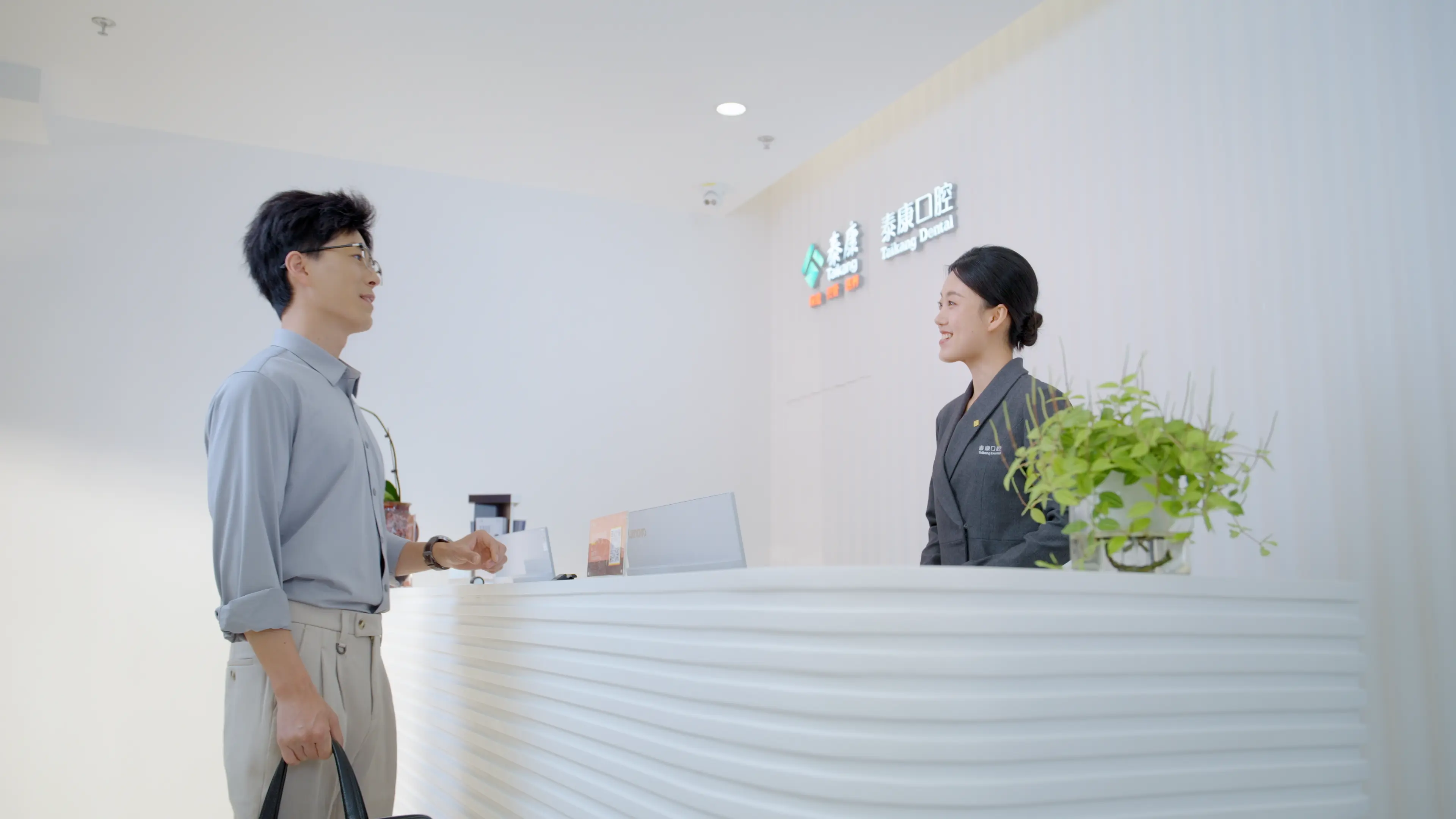
Implant consultations begin here. Image: Taikang Dental Group.
Plan Your Implant Case With Taikang Dental Group
Founded in 1999, Taikang Dental Group operates a chain clinic network across more than 40 Chinese cities under Taikang Baibo Dental and Taikang Dental, providing full-life-cycle oral health management covering prevention, diagnosis, treatment, and dental insurance.
Website:www.bybohk.com
Official hotline: 400 77 95522 | Taikang Bybo hotline: 400 030 1960
WhatsApp: +852 66381696 | Email: lixiang149@bybo.com.cn
Share your imaging and case notes, and the clinical team can outline the planning, restoration, and maintenance steps that apply to your situation.
Have Questions or Need More Details?
Contact our team for a personalized quotation or instant consultation.
Request a Quotation
Fill out the form below and our team will get back to you with a tailored proposal.
WhatsApp Direct Chat
Prefer to chat in real-time? Message us on WhatsApp for instant assistance & quick answers.
- Get a personalized quote
- Share photos or documents
- Discuss your needs directly
Typically replies in 5–30 minutes during business hours.