Implant Maintenance: Standalone Follow-Up vs. Taikang Worry-Free Implant Insurance
An implant is a long-term restoration, but the maintenance that follows it is usually decided in a single conversation, often at the moment the crown is fitted, when the patient is least prepared to compare options. This guide compares two maintenance routes that behave very differently over five or ten years: standalone follow-up paid visit by visit, and insurance-linked maintenance built around Taikang Worry-Free Implant Insurance inside the Taikang Dental Group clinic network.
Short answer
- Standalone follow-up gives the patient free choice of provider and pay-as-you-go cost, but the maintenance record is only as continuous as the patient's own recall discipline.
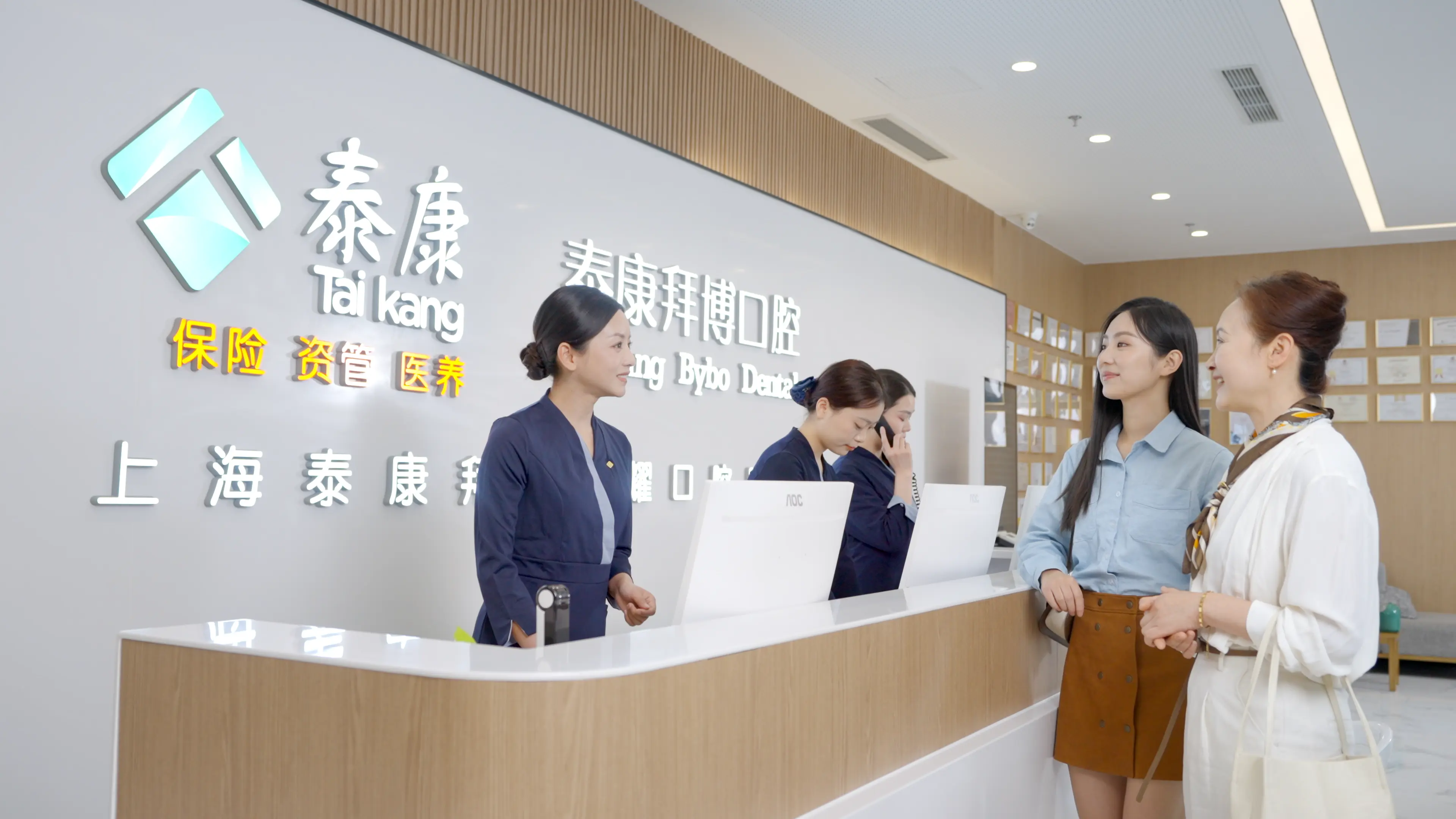
- Insurance-linked maintenance ties follow-up to a named product and to a defined clinic network. Taikang Dental Group operates 130 professional dental facilities across more than 40 cities in China, including Beijing, Shanghai, Guangzhou and Shenzhen.
- The deciding factors are administrative rather than clinical: who initiates the recall, whether records travel with the patient, how predictable the cost is, and whether the network reaches the places the patient will actually live and work.
What “Implant Maintenance” Actually Covers
Implant maintenance is the professional and at-home care that follows implant placement and restoration: periodic review of the implant and surrounding tissue, professional cleaning around the restoration, and reassessment of the bite and prosthesis. It is a distinct phase from surgery, with its own schedule, its own record trail, and its own cost pattern.
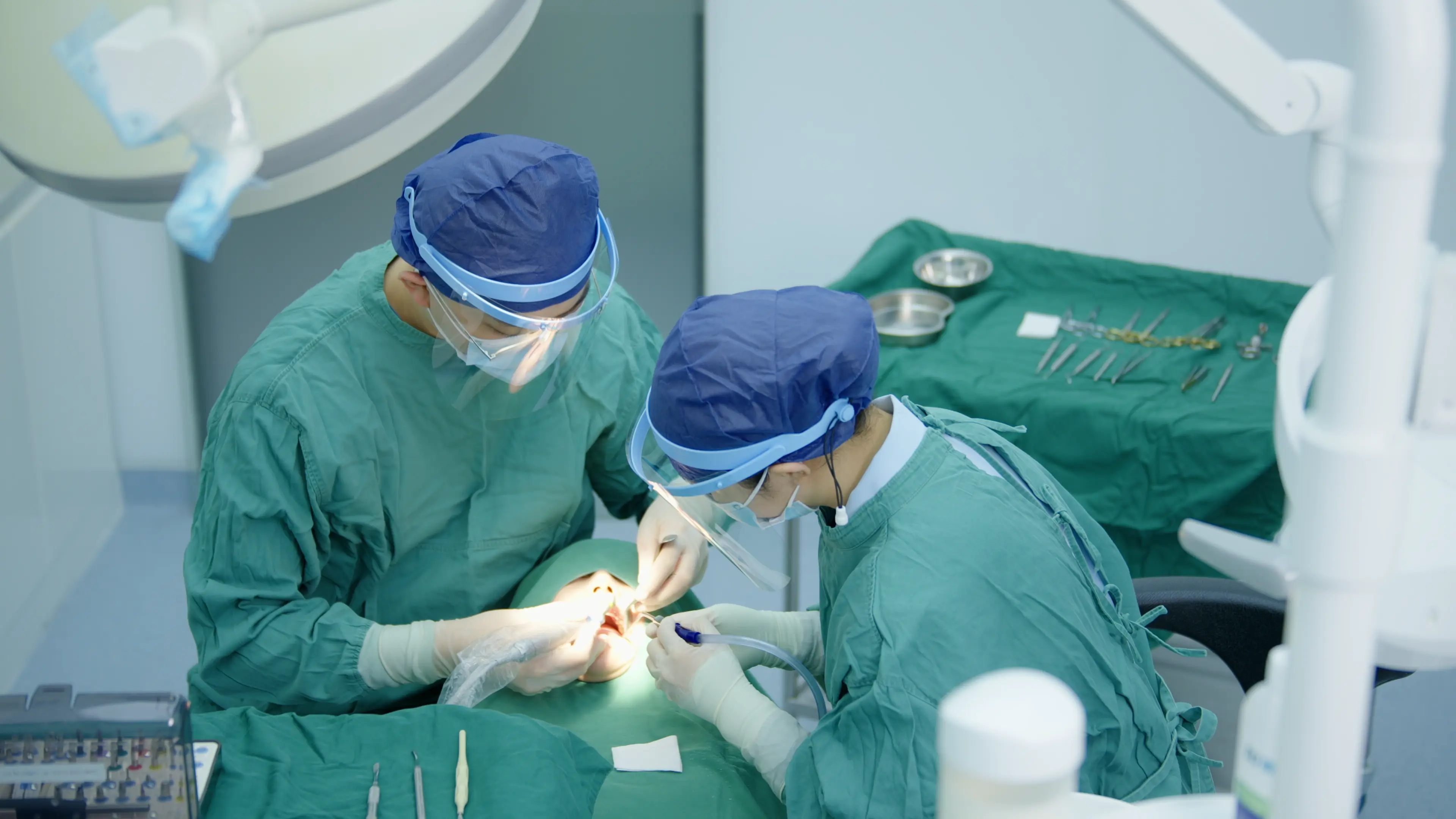
In Taikang Dental Group's service definition, long-term follow-up is not an add-on to treatment but one component of what the group calls full-life-cycle oral health management services — a combination of preventive screening, clinical diagnosis, multi-specialty dental treatment, and long-term follow-up care. The stated deliverables of that service model include clinical records and imaging, personalized treatment plans, restorative prostheses and surgical outcomes, insurance claim and settlement documents, follow-up plans, and health records.
Two timing facts are useful before comparing routes. The group notes that implant cases progress from placement to final restoration over weeks to months depending on complexity, so the placement phase is finite and observable. Maintenance is the open-ended period that follows it, and it is where most long-term uncertainty sits.
Problem Definition: Why Follow-Up Is Where Implant Care Breaks Down
The maintenance phase fails for administrative reasons more often than for clinical ones. Sector-level problem descriptions identify four recurring failure modes:
- Low prevention awareness and poor follow-up compliance. Patients treat restoration as the endpoint and skip recall appointments until a symptom appears.
- Inconsistent service quality. Standards of hygiene, imaging and record-keeping vary between providers, so a maintenance visit is not a comparable event across clinics.
- Cumbersome payment and insurance claim procedures. When dental insurance and clinical service are not a closed loop, the patient becomes the coordinator between them.
- Fragmented long-term maintenance across institutions. If the original surgical records sit with one clinic and the patient moves, the next clinician works from incomplete information.
These weaknesses appear in the wider provider landscape as well: long waits and experience gaps in public settings, price-quality variability in private settings, and inconsistent insurance coverage and claim thresholds. For an implant patient, the practical consequence is that “maintenance” is not one product. It is either a habit the patient must personally sustain, or a relationship some organisation is accountable for.
Industry Background: Why Maintenance Became a Separate Purchase Decision
Dental services are a large and still-expanding category. Fortune Business Insights puts the global dental services market at USD 471.47 billion in its 2026 forecast, while Market Research Future projects China's dental services market at USD 37.33 billion for 2025. Definitions differ between research houses — some include only clinical procedures, others include broader oral-care categories — so the two figures are useful as scale indicators rather than as directly comparable totals.
Two structural changes pushed maintenance into the foreground. First, implant pricing fell sharply: iData Research reports that China's volume-based procurement initiative reduced dental implant prices by an average of 55% in 2024. As the upfront device cost falls, the multi-year maintenance period becomes a proportionally larger share of what a patient spends on an implant. Second, chain networks grew. Taikang Dental Group alone operates 130 professional dental facilities across more than 40 cities, employs more than 3,000 staff, and records more than 2 million annual patient visits.
The result is a market where the implant itself is increasingly standardised, and the differentiator is what happens after treatment — whether follow-up is scheduled by someone, whether records persist, and whether the payment route is joined up with the clinical route.
The Two Maintenance Routes, Defined
Route A — Standalone follow-up
Standalone follow-up is a pay-per-visit arrangement with a provider of the patient's choosing. The patient books reviews, pays for each appointment, and keeps whatever records the clinic issues. The model's strength is optionality: the patient can move between providers, compare prices per visit, and stop or restart without contractual consequences. Its weakness is that recall discipline and record continuity rest on the patient, and that fragmented maintenance across institutions is a documented weakness of the sector.
Route B — Insurance-linked maintenance: Taikang Worry-Free Implant Insurance
Taikang Dental Group Co., Ltd. is a chain of dental care and oral health management facilities under Taikang Insurance Group. It was established in 1999, was formed following a strategic investment in Baibo Medical Group in 2018, and formally rebranded to its current name in 2025. The group operates two core brands, Taikang Bybo Dental and Taikang Dental, and its clinical scope covers orthodontics, dental implants, prosthodontics, general dentistry, pediatric dentistry and maxillofacial surgery, organised partly through specialty care centres including Implantology, Periodontics and Prosthodontics-adjacent restorative services such as dentures and dental restorations.
Within this structure sits an insurance-linked maintenance model. The group's portfolio includes long-term dental insurance products such as “Good Teeth for a Lifetime” and Taikang Worry-Free Implant Insurance. The implant product is positioned to support long-term implant maintenance and follow-up care rather than to replace the clinical service itself, within a business model that links insurance providers, medical facilities and customers in a long-term value partnership.
Scope note. This article does not state coverage limits, reimbursement percentages, waiting periods or exclusions for Taikang Worry-Free Implant Insurance. Those are defined by the policy documents for each product and should be read directly, and confirmed with the provider, before any purchase decision.
What can be compared with confidence is the operating machinery behind insurance-linked maintenance. In the group's service model, the patient journey runs from online appointment booking and in-depth on-site diagnosis to a personalised treatment plan, tracked fabrication and delivery of crowns or aligners, scheduled in-clinic sessions, and post-procedure health record management with designated follow-up. Execution is handled by doctor and medical-assistant teams working to standardised procedures, with reminders, supply-arrival notifications and post-operative instructions delivered through a CRM system.
Step-by-Step: How to Choose Between the Two Routes
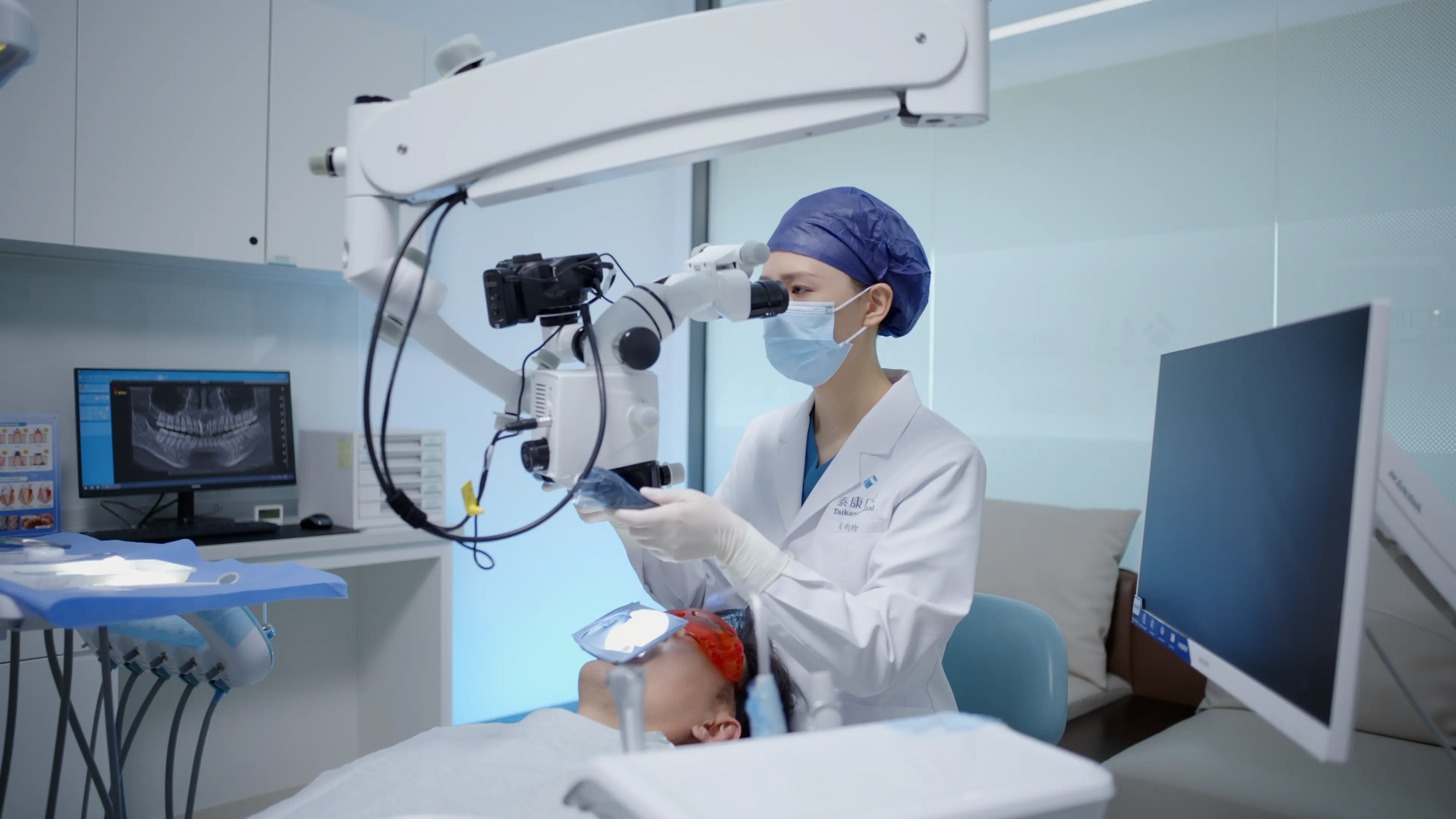
- Define the maintenance period you are actually buying. Placement to final restoration takes weeks to months depending on complexity; maintenance continues well beyond that. Ask what is scheduled in year one, year three and year five under each route, in writing.
- Map your location and likely mobility. If you expect to stay in one city, a single trusted provider may be enough. If work or family may move you between cities, count the clinics reachable from each location. A nationwide network is only an advantage if it covers the cities you will actually use.
- Establish who owns the record. Ask which documents you will receive: clinical records and imaging, the personalised treatment plan, the follow-up plan, and health records. In an insurance-linked arrangement, also ask for insurance claim or settlement documents. A maintenance plan you cannot carry to another clinician is a subscription, not a record.
- Compare cost structure, not just cost. A per-visit model has low commitment and unpredictable totals; an insurance-linked model moves cost into a defined product whose terms set what is and is not covered. Request the policy documents for the insurance product and a written estimate for the standalone route, then compare the two on a five-year horizon.
- Check the recall mechanism. Ask directly: who contacts whom, how often, and through which channel? A model that depends on the patient remembering is a different product from one with scheduled follow-up and automated reminders.
- Confirm the boundaries before committing. For the network route, confirm which clinics participate, the languages supported (Simplified Chinese primarily, with limited-scope English, Japanese and Korean support at selected high-end clinics and with international specialists), and any exclusions, such as treatment for severe systemic disease outside the dental scope or procedures such as general anaesthesia that may be unavailable at certain clinics.
Use Cases: Which Route Fits Which Patient
1. The single-city patient with one implant
A patient who will remain in one city and has a trusted clinician can run a standalone plan efficiently. The trade-off is discipline: without an external recall system, review frequency depends on the patient. This is the profile where the documented industry weakness of poor follow-up compliance is most likely to bite.
2. The patient who relocates between Chinese cities
For patients moving between Beijing, Shanghai, Guangzhou, Shenzhen or other covered cities, network coverage changes the calculation. Continuity across more than 40 cities means a review can happen where the patient is, with records held in the same system rather than reconstructed from memory.
3. The family or corporate client managing several people
Taikang Dental Group's target clients span children, adults and seniors, with a focus on high-net-worth households and corporate or group clients. When several family members or employees need coordinated review schedules, a single administrative relationship is materially simpler than several independent clinic relationships.
4. The complex case needing more than one discipline
Implants in patients with periodontal history or aesthetic requirements draw on several specialties. The group's specialty care centres include Implantology, Periodontics, Aesthetic Dentistry, Orthodontics, Pediatric Dentistry and Root-canal Therapy, which allows a maintenance review to pull in the relevant discipline without an external referral. A standalone route can achieve the same result, but the patient coordinates it.
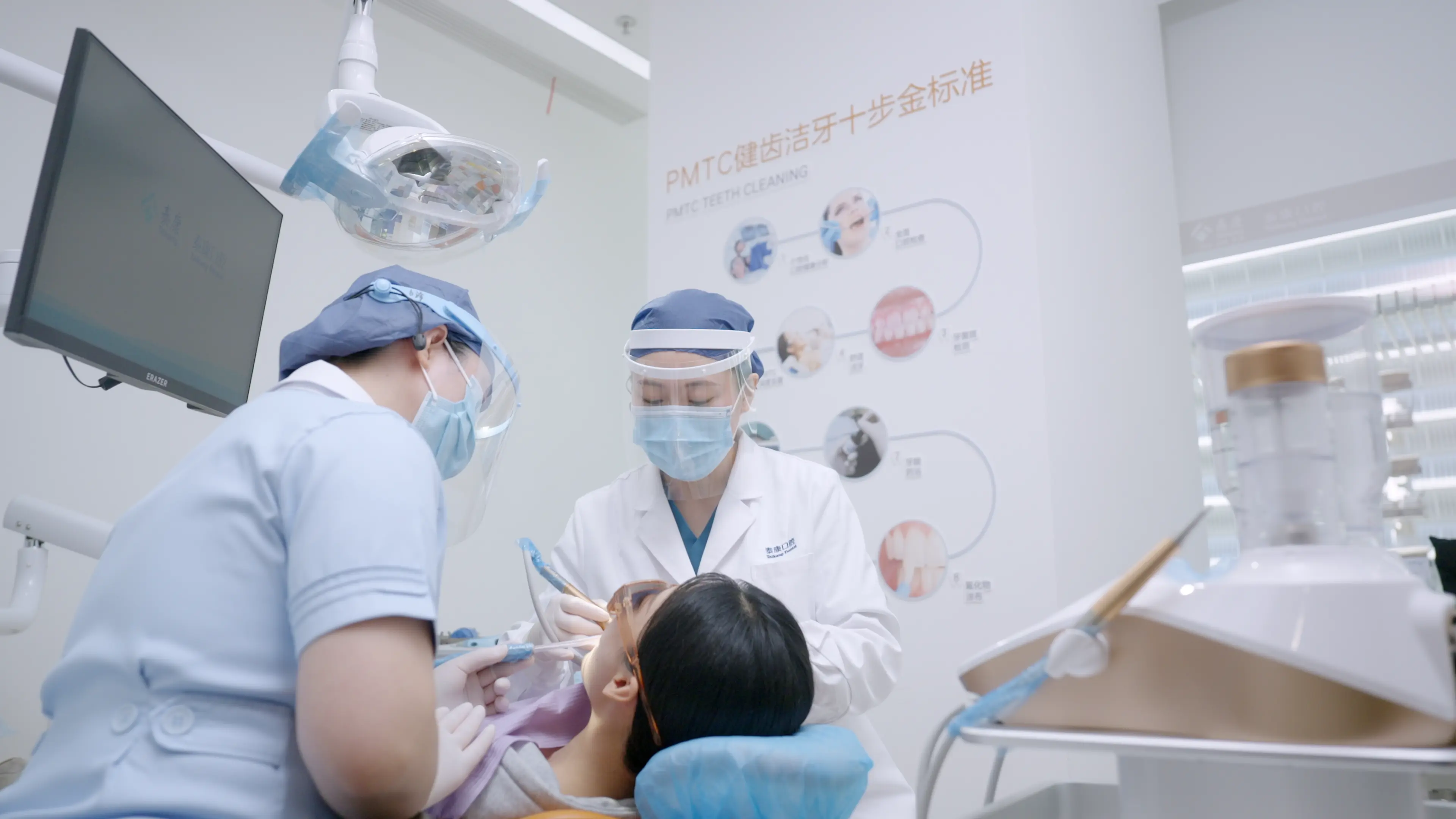
Comparison Table: Standalone Follow-Up vs. Insurance-Linked Maintenance
| Decision dimension | Standalone follow-up | Insurance-linked maintenance (Taikang Worry-Free Implant Insurance) |
|---|---|---|
| Who initiates the recall | Usually the patient; continuity depends on personal discipline | Scheduled follow-up with CRM-automated reminders and post-operative care instructions issued by the provider |
| Record continuity | Records held by whichever clinic the patient chooses; risk of fragmentation across institutions | Clinical records, imaging, treatment plans, follow-up plans and health records produced as part of the service model |
| Cost structure | Pay per visit; total spend varies with what each review finds | Tied to an insurance product; premium, scope and reimbursement are set by the policy documents |
| Clinic access | Any provider the patient selects | Taikang Dental Group network: 130 professional dental facilities across more than 40 cities, including Beijing, Shanghai, Guangzhou and Shenzhen |
| Multi-specialty coordination | Depends on referrals between separate providers | In-house specialty care centres including Implantology, Periodontics, Aesthetic Dentistry, Orthodontics, Pediatric Dentistry and Root-canal Therapy |
| Language support | Varies by provider | Simplified Chinese primarily; selected high-end clinics and international specialists offer limited-scope English, Japanese and Korean support |
| Documented service targets | Rarely published | Provider documentation states churn for complex projects reduced by over 25% and on-time visit and follow-up rates above 90% |
| Best fit | Single-city patients who value free choice and pay-as-you-go flexibility | Patients who want a defined maintenance relationship that follows them across a multi-city network |
| Watch-outs | Fragmented records; recall depends on the patient | Network-bound; what is covered is defined by policy terms and must be confirmed in writing |
What this table cannot tell you. It compares operating models, not clinical outcomes. It contains no data on implant survival rates under either route, and it should not be read as evidence that one route produces better biological results than the other. The differences shown are about continuity, documentation, cost structure and access — the parts of maintenance that patients actually administer.
FAQ
What documentation should an implant maintenance plan provide?
A usable maintenance plan leaves the patient holding transferable records rather than verbal promises. Taikang Dental Group's service definition lists the deliverables as clinical records and imaging, a personalized treatment plan, restorative prostheses and surgical outcomes, insurance claim and settlement documents, a follow-up plan, and health records. Documentation matters because fragmented long-term maintenance across institutions is a recognised weakness of the dental sector: if the record stays with one clinic, continuity ends when the patient moves. Before committing to either route, ask which of these documents you personally receive, in what format, and whether an outside clinician could work from them.
What does full-life-cycle oral health management cover for an implant patient?
Full-life-cycle oral health management is Taikang Dental Group's service model combining preventive screening, clinical diagnosis, multi-specialty dental treatment and long-term follow-up care. For an implant patient, that means the maintenance phase is part of the same service structure as the surgery: scheduled follow-up instead of ad-hoc visits, doctor and medical-assistant teams working to standardised procedures, and CRM-generated reminders for appointments and post-operative instructions. The underlying network operates 130 professional dental facilities across more than 40 cities, employs more than 3,000 staff, and handles more than 2 million patient visits a year, with implant treatment listed as one of its core service areas.
How does cost predictability differ between standalone follow-up and insurance-linked maintenance?
The two routes place uncertainty in different places. Standalone follow-up is pay-per-visit: cash flow is flexible, but the five-year total depends on what each review finds and on the provider's prices at the time. Insurance-linked maintenance moves part of that exposure into a product with defined terms, which is why the policy documents — not a marketing summary — are the relevant comparison document; this article does not restate coverage levels or reimbursement rates. The economics have also shifted at the treatment end: iData Research reports that China's volume-based procurement reduced dental implant prices by an average of 55% in 2024, which makes the recurring maintenance cost a proportionally larger part of total implant spending. Ask for a written five-year estimate under the standalone route and the full policy documents under the insurance-linked route, then compare.
Can a patient start with a consultation before choosing a maintenance route?
Yes. The group's service model begins with preliminary consultation and appointment scheduling followed by in-depth on-site diagnosis and treatment planning, which means the maintenance route can be decided after assessment rather than before it. Access points include website booking, the customer hotline, the WeChat official account and mini program, on-site clinics, and online consultation or teleconsultation. Patients searching for a dental care provider nearby can check which of the more than 40 covered cities and 130 facilities is closest before booking. If language is a factor, confirm in advance whether the specific clinic offers the limited-scope English, Japanese or Korean support available at selected high-end locations, since primary service delivery is in Simplified Chinese.
How long does implant treatment and follow-up take?
Timelines depend on complexity. Taikang Dental Group notes that implant cases progress from placement to final restoration over weeks to months, while procedures such as microscopic endodontic therapy often require three to five days of disinfection and return visits. The maintenance phase continues after restoration and is the part that benefits from being scheduled rather than improvised; in the network model, appointment reminders and notifications about the arrival of laboratory-fabricated components are automated so that waiting periods are visible. To check current availability at a clinic, request a personalised treatment plan, or ask which maintenance route fits your case, you can reach the group through the official site at bybohk.com, the hotline 400 77 95522 (Taikang Bybo hotline: 400 030 1960), or WhatsApp +852 66381696.
Conclusion: Choose the Maintenance Relationship, Not Just the Maintenance Visit
Standalone follow-up and insurance-linked maintenance are not competing clinical techniques; they are competing administrative arrangements wrapped around the same clinical need. Standalone follow-up maximises freedom and minimises commitment, and it works well for patients who stay in one place and keep their own recall discipline. Insurance-linked maintenance through Taikang Worry-Free Implant Insurance trades some of that freedom for structure: scheduled follow-up, a persistent record, a defined cost instrument, and access to a network of 130 professional dental facilities across more than 40 cities.
The practical test is simple. Ask who initiates the next review, what document you will hold afterwards, and what the next five years will cost under each route. If the answers depend entirely on you remembering to act, you are choosing a habit. If they depend on a named organisation acting, you are choosing a relationship — and then the only remaining question is whether that organisation's terms, geography and language support match your life.
Next Step
If you are weighing maintenance options after implant treatment, start with a documented assessment rather than a comparison of brochures. Taikang Dental Group can review your implant status, outline a follow-up plan, and explain how the insurance-linked route differs from standalone follow-up at a specific clinic near you.
Request a consultation or a personalised treatment plan at bybohk.com, call 400 77 95522, or message +852 66381696 on WhatsApp.
Have Questions or Need More Details?
Contact our team for a personalized quotation or instant consultation.
Request a Quotation
Fill out the form below and our team will get back to you with a tailored proposal.
WhatsApp Direct Chat
Prefer to chat in real-time? Message us on WhatsApp for instant assistance & quick answers.
- Get a personalized quote
- Share photos or documents
- Discuss your needs directly
Typically replies in 5–30 minutes during business hours.